









Keynotes
Keynote #1:
Title: AI for Space, Space for AI: The Rise and Limits of the Space Cloud
Abstract: Satellites are turning from bent-pipe relays into computing infrastructure: an NVIDIA H100 has already run LLM inference in orbit, and filings for orbital data centers count satellites by the hundreds of thousands. This talk first presents our work on both sides of this convergence. AI for Space brings learning to the operation of satellite networks; Space for AI designs the Space Cloud that hosts computing in orbit. The talk then turns to the limit that surprises most audiences: heat. The cold of space is often sold as free cooling, yet with no air or water to carry heat away, every watt a processor dissipates must leave as infrared radiation. Our lifecycle models show that the radiator of a 1-kW GPU node weighs more than twelve times the GPU and dominates the launched mass. Since every launched kilogram carries carbon, this raises the central open question: can non-repairable orbital infrastructure be both dependable and sustainable?
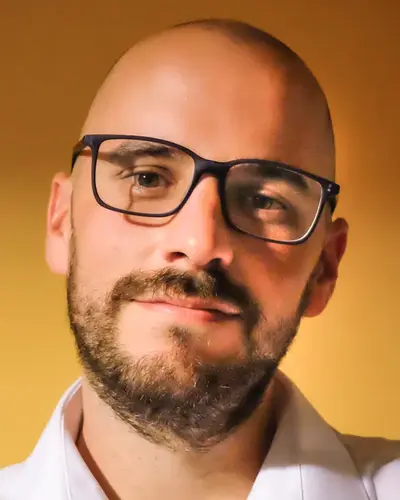
Juan A. Fraire
(Inria · CONICET–UNC · Saarland University)
Bio: Juan A. Fraire is a researcher at Inria, the French national research institute for digital science and technology, in the Agora team in Lyon. He is also with CONICET and the National University of Córdoba (UNC) in Argentina, and a guest professor at Saarland University in Germany. His work joins telecommunications and computer science to build networks beyond Earth: delay-tolerant networks for deep space, satellite links for Internet-of-Things devices, routing across constellations of thousands of satellites, and computing in orbit, including its energy and carbon costs. His contact-graph routing code runs in ION and HDTN, NASA’s networking software for space. He chairs the SPACE Research Group of the Internet Research Task Force (IRTF), co-founded the Space-Terrestrial Internetworking Workshop (STINT) in 2014 and still chairs it, and sits on the board of IPNSIG. He has published more than 180 papers and supervised 16 doctoral students, seven of whom have completed their PhD.
Keynote #2:
Title: Network-native AI
Abstract: Artificial intelligence (AI) has permeated research in many scientific domains, and networking is no exception: machine learning is widely considered instrumental to the automation of network operation, and a vast related literature has emerged in recent years. Yet, networks do represent an exception when it comes to the unique requirements they impose to AI. Meeting these specifications is crucial to the viability and performance of AI-driven networking, and often calls for an original and dedicated design of machine learning models–that is, the development of network-native AI. In this talk, I will discuss challenges related to aspects like latency, computing, adaptability, or performance, and provide examples of how the integration of AI in network systems often requires advancing the state of the art in machine learning.
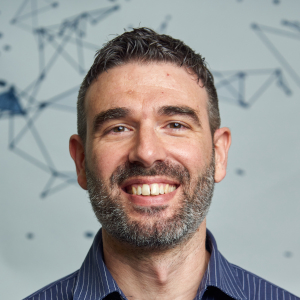
Marco Fiore
(IMDEA Networks Institute, Spain)
Bio: Marco Fiore is a Research Professor at IMDEA Networks Institute, where he leads the Networks Data Science group, and co-founder and CTO at Net AI, a UK-based network intelligence company. He received MSc degrees from University of Illinois at Chicago and Politecnico of Torino, a PhD degree from Politecnico di Torino, and a Habilitation à Diriger des Recherches from Université de Lyon. Marco has held tenured positions at Institut National des Sciences Appliquées de Lyon and National Research Council of Italy, and has been a visiting researcher at Rice University, Universitat Politècnica de Catalunya, and University College London. Marco’s research is at the interface of mobile networks and data science, and has received multi-million Euro funding from the European Commission and national agencies in Spain, France and Italy, as well as a number of recognitions that include two best paper awards at IEEE INFOCOM. Marco is a former Marie Curie fellow and Royal Society visiting research fellow, and a Senior Member of IEEE and ACM.
Keynote #3:
Title: The networking of agentic AI
Abstract: AI has evolved from training pipelines and inference endpoints into full systems of autonomous agents that discover, communicate, and coordinate across the cloud continuum, introducing a new class of network traffic with patterns distinct from all traditional application classes. This talk surveys the state of the art across the scientific multi-disciplinary domains of neural network advances, multi-agent systems, formal methods, and networking, drawing from recent advances at ICML, NeurIPS, and the networking research community. We examine three converging fronts: 1) agent communication architectures and protocols for interoperability and self-discovery, 2) dynamic composability where task-adaptive topologies emerge from learned coordination, and 3) neurosymbolic AI applied to networking for compressed inter-agent communication and verifiable agent safety. We close with open research questions on whether the next frontier requires revisiting the protocol stack for structured agent communication and semantic negotiation.

Imen Grida Ben Yahia
(Principal, AI Scientist AWS, UK)
Bio: Dr. Imen Grida Ben Yahya is a Principal Applied Scientist at Amazon Web Services (AWS) Networking Services. Her work spans foundation models architecture, sequence-to-sequence modeling, spatio-temporal data analysis, and Agentic AI pipelines, with production deployments at country scale in the communication network space. Over 15 years, Imen has bridged research, applied science, and engineering leadership across cloud-native AI, deep learning, and large-scale intelligent autonomous systems. She holds a Ph.D. from Institut Polytechnique de Paris and has authored over 100 peer-reviewed scientific papers.
Keynote #4:
Title: Why AI Still Can’t Handle the Physical World: AGI-Native Wireless Systems for Physical AI
Abstract: Artificial intelligence (AI) revolutionized multiple sectors ranging from healthcare to entertainment. Remarkably, despite this progress, today’s AI tools, including deep learning and generative AI (e.g., large language models), still fail when embedded into physical systems, such as robots, drones, or vehicles, that operate under the physical laws of the real world, as evidenced by recent high-profile incidents involving Waymo, GM’s Cruise, and Tesla Autopilot. Indeed, the success of physical AI systems is contingent upon addressing three intertwined challenges: (a) Limited ability of existing AI frameworks to handle unseen and out-of-domain scenarios, (b) Lack of first-principle solutions that allow a physical AI agent to navigate the real world governed by physical laws, and (c) Need for pervasive connectivity to support physical AI tasks, such as inference and communications, at scale. In this talk, we address these challenges by pioneering a novel wireless system architecture and framework, dubbed artificial general intelligence (AGI)-native wireless systems, that supports the intelligence and communications needs of physical AI systems. We demonstrate how a strategic fusion of wireless systems, digital twins, neuroscience, and AI can catalyze a paradigm shift in both wireless and AI technologies through an AGI architecture founded on three components: a) perception, b) world model, and c) action-planning, imbued with human-like cognitive capabilities including reasoning, planning, imagination, and deep thinking. Grounding each component in concrete results, we first demonstrate how perception enables effective semantic communication systems that address the connectivity needs of physical AI at scale, and will be a staple of 6G systems and beyond. We then introduce a novel world model architecture built on Kahneman’s thinking fast and slow principle, demonstrating its effectiveness for AI generalization and long-term reasoning, and its ability to enable data-efficient link scheduling with significant age of information gains in wireless vehicular networks, and robust generalization to unseen network conditions such as varying vehicle densities and link blockage scenarios. Finally, integrating all three components, we introduce a fundamental test-time scaling law that allows physical AI agents to handle unforeseen real-world scenarios. We particularly demonstrate how the first principle of active inference instills a survival instinct via surprise minimization into the physical AI agents, enabling them to reason and generalize beyond their training data. We conclude with a discussion of the exciting opportunities in this space, and how this vision transforms telecom operators from communication providers into intelligence providers for physical AI.
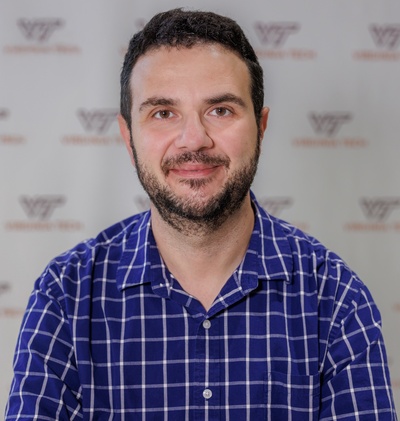
Walid Saad
(Rolls Royce Commonwealth Professor at Virginia Tech, USA)
Bio: Walid Saad (S’07, M’10, SM’15, F’19) received his Ph.D degree from the University of Oslo, Norway in 2010. He is currently the Rolls Royce Commonwealth Professor in Digital Twin Technology, a Professor at the Department of Electrical and Computer Engineering, and a founding faculty of the Institute for Advanced Computing at Virginia Tech, where he leads the Network intelligEnce, Wireless, and Security (NEWS) laboratory. His research interests include wireless networks (5G/6G/beyond), machine learning, game theory, quantum communications/learning, security, semantic communications, cyber-physical systems, and network science. Dr. Saad is a Fellow of the IEEE. He is also the recipient of the NSF CAREER award in 2013 and the Young Investigator Award from the Office of Naval Research (ONR) in 2015. He was the (co-)author of twelve conference best paper awards at IEEE WiOpt in 2009, ICIMP in 2010, IEEE WCNC in 2012, IEEE PIMRC in 2015, IEEE SmartGridComm in 2015, EuCNC in 2017, IEEE GLOBECOM (2018 and 2020), IFIP NTMS in 2019, IEEE ICC (2020 and 2022), and IEEE QCE in 2023. He is the recipient of the 2015 and 2022 Fred W. Ellersick Prize from the IEEE Communications Society, of the IEEE Communications Society Marconi Prize Award in 2023, and of the IEEE Communications Society Award for Advances in Communication in 2023. He was also a co-author of the papers that received the IEEE Communications Society Young Author Best Paper award in 2019, 2021, and 2023. He received the 2025 Jacob A. Lutz III Eminent Scholar award from Virginia Tech. Dr. Saad was an IEEE Distinguished Lecturer in 2019-2020. He has been annually listed in the Clarivate Web of Science Highly Cited Researcher List since 2019. He was the inaugural Editor-in-Chief for the IEEE Transactions on Machine Learning in Communications and Networking.